Pollinator Protection
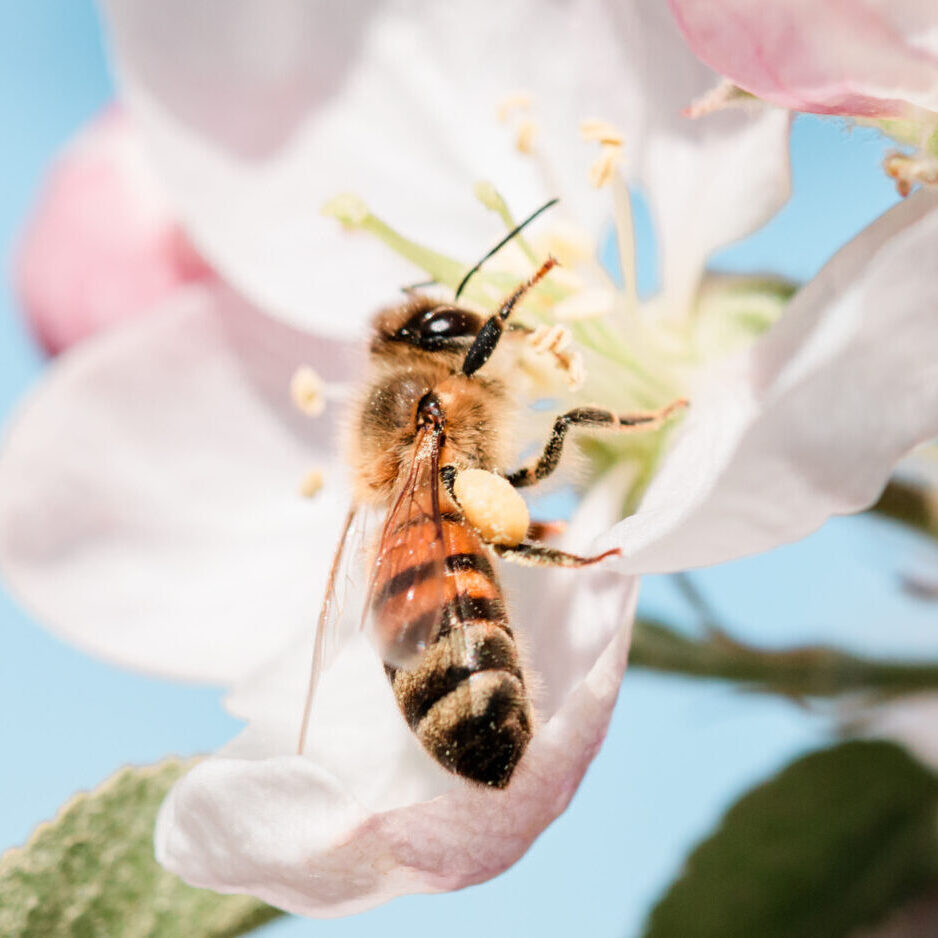
Our precious pollinators make growing apples possible. And while our climate doesn’t support year-round bee colonies, we will always protect and nourish them while they are in our care. We are committed to protecting honey bees and providing them with a safe, natural habitat where they can thrive. We strategically plant our pollinator habitat in areas where inputs, especially nitroguanidine neonicotinoids, are not used. In addition, we are researching different plant protectors that work as replacements and still prove to be effective in pest management.
Bees gain weight when they are in our orchards because they have so much accessibility to food – it is true, time with us helps heal the bees. Apples blossoms have abundant nectar that provide ample nourishment for the honeybee colonies, allowing the hives to leave healthier than when they arrived. 3,000 acres of perimeter orchard land is left in a natural state for bee and animal habitat.
How we care for and protect our pollinators is fully congruent with the United States Environmental Protection Agency (EPA)’s Integrated Pest Management (IPM) Certification. Certification is through the Global GAP-Integrated Farm Assurance Fruit and Vegetable version 5.4.
Pollinator Protection
Our precious pollinators make growing apples possible. And while our climate doesn’t support year-round bee colonies, we will always protect and nourish them while they are in our care. We are committed to protecting honey bees and providing them with a safe, natural habitat where they can thrive. We strategically plant our pollinator habitat in areas where inputs, especially nitroguanidine neonicotinoids, are not used. In addition, we are researching different plant protectors that work as replacements and still prove to be effective in pest management.
Bees gain weight when they are in our orchards because they have so much accessibility to food – it is true, time with us helps heal the bees. Apples blossoms have abundant nectar that provide ample nourishment for the honeybee colonies, allowing the hives to leave healthier than when they arrived. 3,000 acres of perimeter orchard land is left in a natural state for bee and animal habitat.
How we care for and protect our pollinators is fully congruent with the United States Environmental Protection Agency (EPA)’s Integrated Pest Management (IPM) Certification. Certification is through the Global GAP-Integrated Farm Assurance Fruit and Vegetable version 5.4.
New SugarBee® Ecotrays Coming Soon!
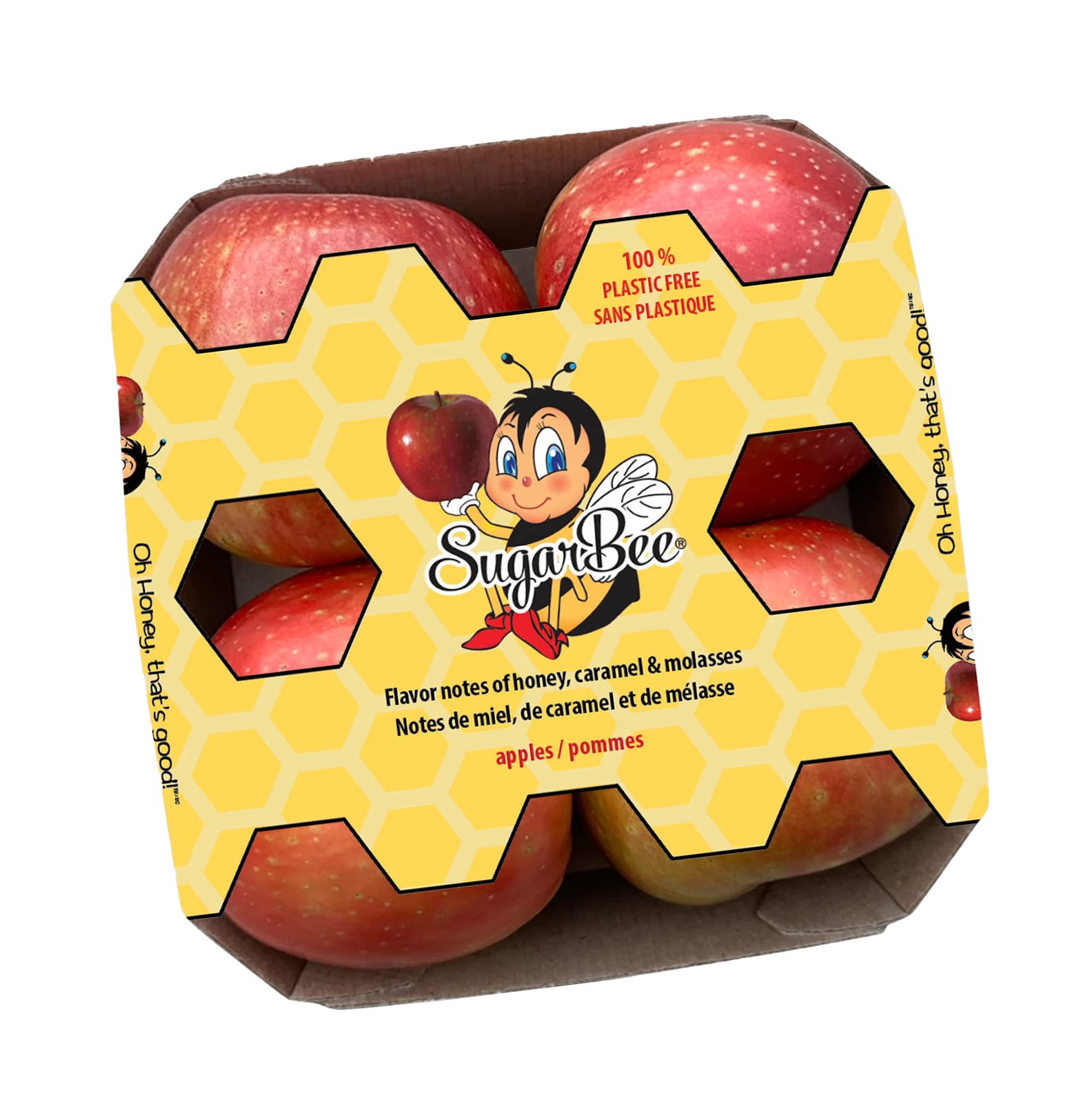
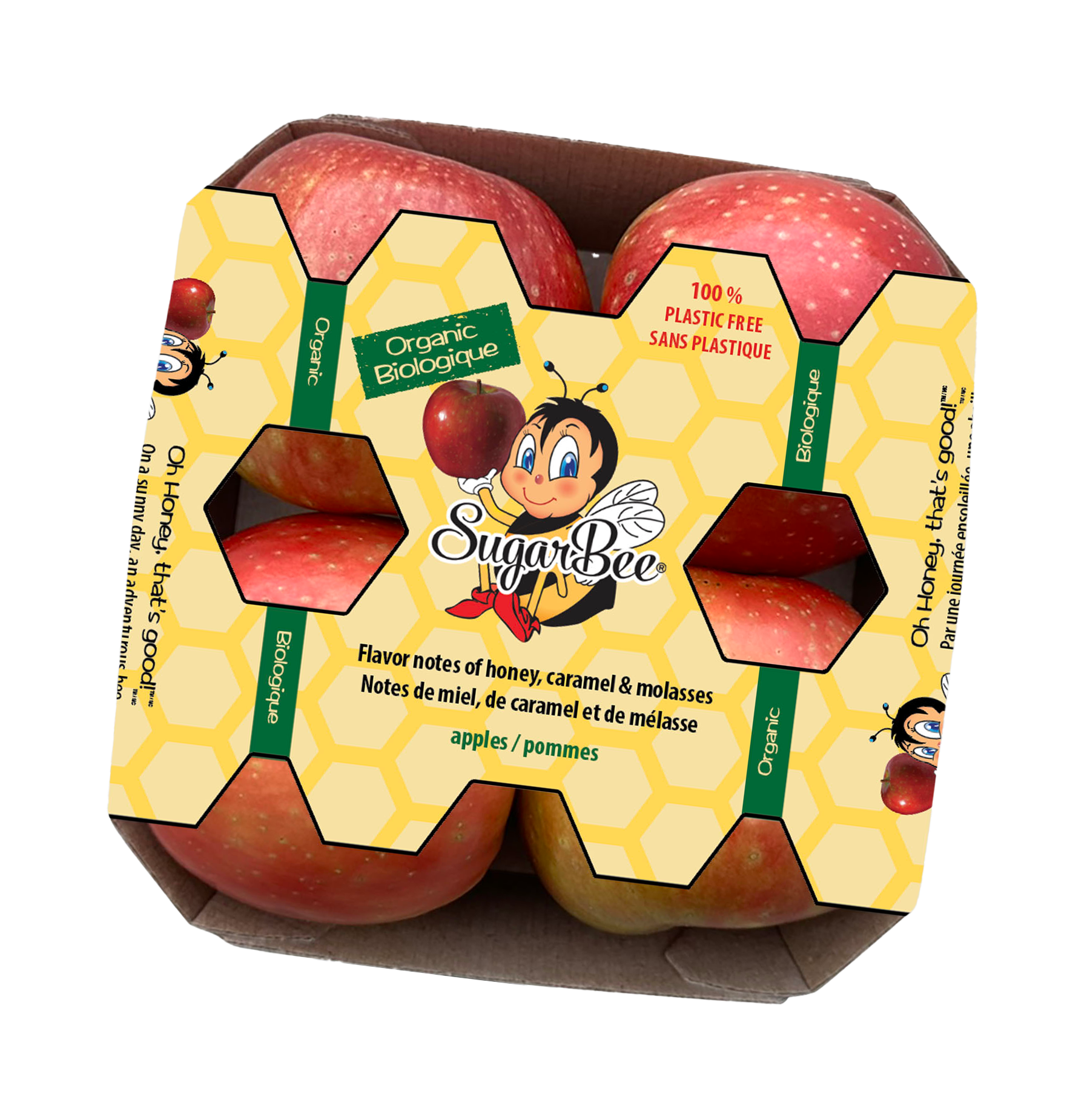
SugarBee® growers and packers are committed to reducing waste every step of the way, from the orchard to the home. The recyclable cardboard 4-pack reduces plastic and uses minimal material while still protecting apples for retail and transport.
New SugarBee® Ecotrays Coming Soon!
SugarBee® growers and packers are committed to reducing waste every step of the way, from the orchard to the home. The recyclable cardboard 4-pack reduces plastic and uses minimal material while still protecting apples for retail and transport.
Composting
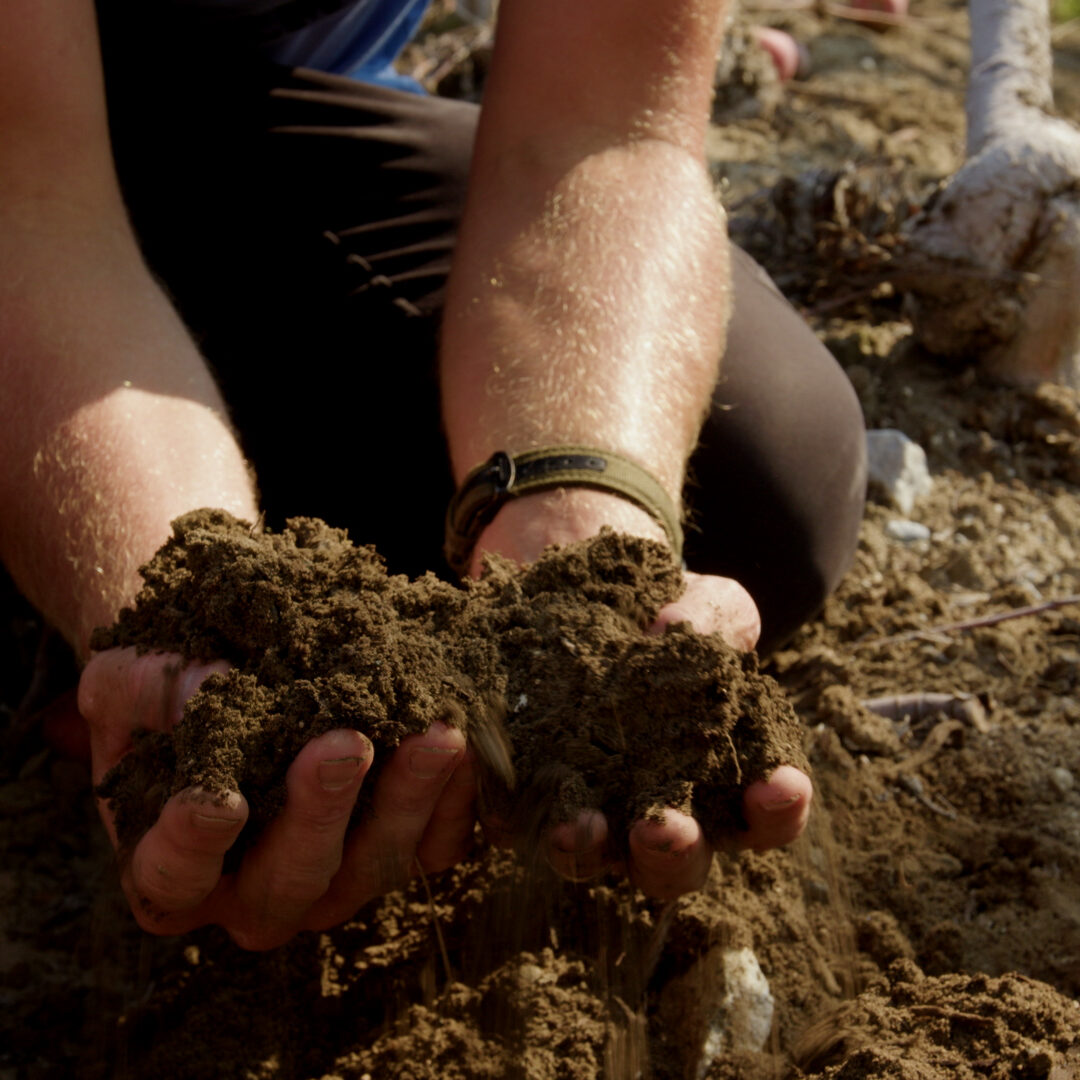
Our composting program is a cornerstone of the operation, diverting more than 50 million pounds of organic waste from landfills each year. Inputs include mulched orchard wood, organic yard waste from employer-provided housing, locally sourced community organics, manure from neighboring cattle operations, and warehouse fruit waste such as leaves, stems, and culled fruit.
The result is a nutrient-rich, biologically active compost that improves soil health and fertility, supporting long-term orchard productivity and helping advance our broader sustainability goals.
Composting
Our composting program is a cornerstone of the operation, diverting more than 50 million pounds of organic waste from landfills each year. Inputs include mulched orchard wood, organic yard waste from employer-provided housing, locally sourced community organics, manure from neighboring cattle operations, and warehouse fruit waste such as leaves, stems, and culled fruit.
The result is a nutrient-rich, biologically active compost that improves soil health and fertility, supporting long-term orchard productivity and helping advance our broader sustainability goals.
Carbon Sequestration
Carbon Space is a partner in analyzing and reporting on our current and future carbon initiatives. In their initial study, they showed that orchards can serve as incredibly valuable tools for carbon sequestration, meaning orchards pull carbon out of the air.
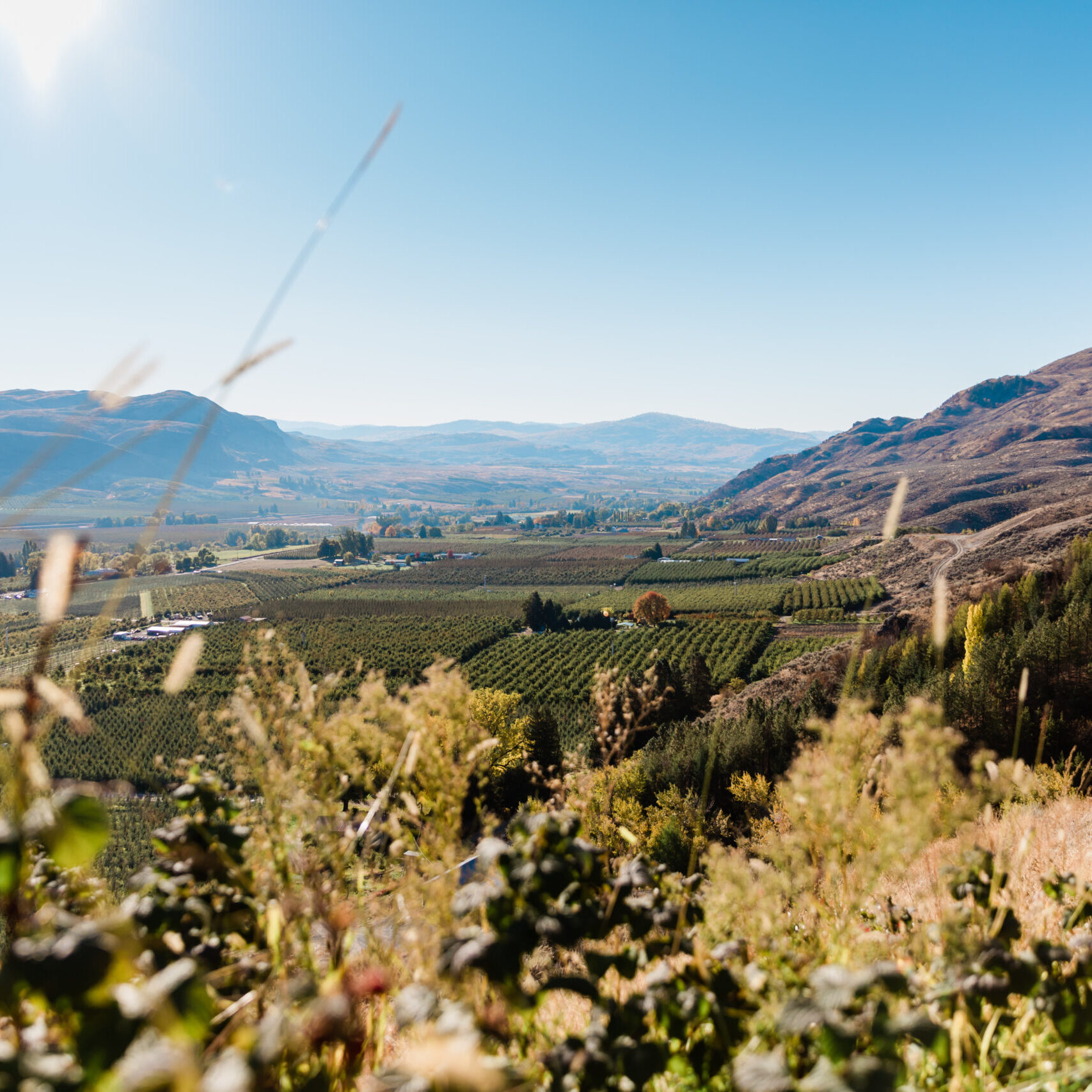
In 2014, 32.62 acres of grass and sagebrush were converted to orchards. Before the conversion (2000-2013), the areas sequestered an average of 21.50 t CO2/year. After establishing the orchards, they sequestered an average of 80.60 t CO2/year (2014-2022). This transition nearly quadrupled the combined annual carbon sequestration in that area.
Carbon Sequestration
Carbon Space is a partner in analyzing and reporting on our current and future carbon initiatives. In their initial study, they showed that orchards can serve as incredibly valuable tools for carbon sequestration, meaning orchards pull carbon out of the air.
In 2014, 32.62 acres of grass and sagebrush were converted to orchards. Before the conversion (2000-2013), the areas sequestered an average of 21.50 t CO2/year. After establishing the orchards, they sequestered an average of 80.60 t CO2/year (2014-2022). This transition nearly quadrupled the combined annual carbon sequestration in that area.
Energy
SugarBee® is committed to reducing fossil fuel usage while increasing renewable and clean energy across operations. As of 2023, 85% of energy used came from renewable/clean energy sources. This is in large part due to the solar panel installations on several of the largest packing facilities, in addition to Washington State’s ability to produce a great amount of hydroelectric power. Together, these efficiencies help save 9.6 million kWh annually.

Energy
SugarBee® is committed to reducing fossil fuel usage while increasing renewable and clean energy across operations. As of 2023, 85% of energy used came from renewable/clean energy sources. This is in large part due to the solar panel installations on several of the largest packing facilities, in addition to Washington State’s ability to produce a great amount of hydroelectric power. Together, these efficiencies help save 9.6 million kWh annually.
Social Responsibility
Social Responsibility

Sponsorship of Scripps Teacher of the Year

Sponsorship of CMA Teacher of Excellence
Coming early 2026: 150+ Early Childhood Classrooms Provided with SugarBee® Apples and Farm Education
Sponsorship of Scripps Teacher of the Year
Sponsorship of CMA Teacher of Excellence
Coming early 2026: 150+ Early Childhood Classrooms Provided with SugarBee® Apples and Farm Education
Responsible Labor
Responsible Labor
Companies responsible for SugarBee® growing, packing, and selling recently underwent a comprehensive evaluation and rating of our labor practices and management systems. A non-biased third party company gave us an Outstanding + Above Average Rating among industry peers in the areas of focus.
Overall Assessment:
- Effective in managing labor and safety risks.
- Policies and guidelines are mature.
- Company maintains thorough documentation and policies regarding worker safety and quality of life and conducts trainings in the language workers speak.
Freedom of Association and Grievance Mechanisms:
- Worker voice group with elected representatives who can raise concerns with senior leadership.
- Health and safety committee formed by workers to raise concerns.
- Open door policy that serves as communication channel between management and workers
Health and Safety:
- Above average job of addressing potential risks at operation and is effectively managed.
- Company seeks out ways to go above and beyond legally mandated requirements where feasible, to provide decent living conditions to their workers.
Companies responsible for SugarBee® growing, packing, and selling recently underwent a comprehensive evaluation and rating of our labor practices and management systems. A non-biased third party company gave us an Outstanding + Above Average Rating among industry peers in the areas of focus.
Overall Assessment:
- Effective in managing labor and safety risks.
- Policies and guidelines are mature.
- Company maintains thorough documentation and policies regarding worker safety and quality of life and conducts trainings in the language workers speak.
Freedom of Association and Grievance Mechanisms:
- Worker voice group with elected representatives who can raise concerns with senior leadership.
- Health and safety committee formed by workers to raise concerns.
- Open door policy that serves as communication channel between management and workers
Health and Safety:
- Above average job of addressing potential risks at operation and is effectively managed.
- Company seeks out ways to go above and beyond legally mandated requirements where feasible, to provide decent living conditions to their workers.
Women in AG

Melinda Mendoza
Melinda has spent over 22 years at Chelan Fresh/Borton & Sons, building a strong career as a controller and leading the accounting department to ensure accurate reporting and sound financial practices. She values the company’s family roots and employee-focused culture, and appreciates the support that helped her grow professionally while balancing family life and earning her master’s in accounting.
Melinda views leadership as a responsibility that requires providing direction, motivating others, resolving conflict, and adapting to team needs through active listening. In a male-dominated industry, she advocates for women in leadership, noting the unique perspectives they bring and their role in strengthening teamwork and workplace equality.
Her words of wisdom resonate deeply: “There is no role within the company that is more important than another. Each of us plays an integral part in a giant puzzle. Take time to know your coworkers, understand their stories, and always be kind. Treat others how you would want to be treated.”

Denise Hinkley
Denise Hinkley has spent nearly 12 years at Chelan Fresh as part of the Domestic Sales team, selling apples, pears, and cherries while ensuring customers stay satisfied. Known for her reliability, attention to detail, and strong communication, she’s a dedicated team player who values building lasting customer relationships.
Denise’s career with Chelan Fresh began unexpectedly after meeting Tim Evans, the company’s CEO at the time, while relocating to the area, and she quickly connected with the company’s culture and values. She believes great leadership means guiding others with confidence and integrity, keeping teams motivated, and working toward shared goals. Denise also champions women in leadership for the empathy and fresh perspectives they bring.
Her guiding principle? “Be yourself. Everyone else is already taken.”

Julie DeJarnatt
Julie DeJarnatt has spent 10+ years at Chelan Fresh and now serves as VP of Marketing & Brand Strategy, helping connect retail buyers and consumers to the growers and products at the core of the company. She is passionate about building strong relationships and supporting the grower-owned model that helps sustain agriculture for future generations.
After moving from a retail career, Julie chose Chelan Fresh for its deep commitment to growers and the opportunity to elevate their voices in the marketplace. She believes great leadership means modeling the right behaviors, developing individual potential, and empowering team members to reach their capabilities. Julie has been recognized for her excellence by receiving the ‘Apple Person of the Year’ in 2025. She also advocates for more women in agriculture leadership and emphasizes work-life harmony through open family communication and focusing on presence over perfection.